STEM-BASED GREEN TEA

Kukicha

This kukicha offers another way to discover Japanese green tea: a tea composed mainly of stems, separated from the leaves during sorting. It brings together three cultivars: Yabukita, Okumidori and Sayamakaori. ASADORI selected it from Jokoen Tea Farm in Wazuka, Kyoto Prefecture.

Producteur
Jokoen Tea Farm
Mode de culture
No chemical fertilisers
Harvest
Spring 2026
Weight
€9,50 50 grams · Taxes incluses

Understanding the tea

What is kukicha?

Kukicha is a Japanese green tea made mainly from stems, separated from the leaves when teas such as sencha or gyokuro are sorted. Its name means ‘stem tea’. Its profile is often light and sweet, with nuances that depend on the tea from which the stems come. It offers a way to discover another part of the tea plant.

This tea generally contains less caffeine than teas made from leaves. It is therefore an excellent choice for enjoying the taste of green tea at different times of the day, when looking for a less stimulating drink.

Brewing

Brewed well,
enjoyed more.

Japanese tea is usually brewed in small amounts, over several infusions with the same leaves.

When an infusion is ready, empty the teapot completely into the cups or a jug each time. The leaves no longer sit in water and are ready for the next infusion.

How to brew

Kukicha

STEM-BASED GREEN TEA

Water
60 to 70 °C
Time
~60 sec
Dosage
3 to 5 gfor 100 ml

Keep the ratio: 6 à 10 g for 200 ml · 9 à 15 g for 300 ml

And then

Subsequent infusions

Keep the leaves from the previous infusion. Use water slightly hotter than for the previous infusion.

+5 to 10 °C~20 sec

Use soft water

Low-mineral water, spring or filtered, preserves the finesse of the aromas. Hard water flattens the umami and sharpens the astringency.

Storing your tea

Keep your tea in an airtight container, away from light, strong odours and moisture.

The cultivar

Yabukita, Okumidori and Sayamakaori.

A blend of three cultivars

This kukicha brings together three cultivars, meaning three varieties of tea plant: Yabukita, Okumidori and Sayamakaori.

Yabukita is the most widely grown variety of tea plant in Japan, used for different types of tea.

Okumidori is a late-budding cultivar, valued for its often sweet and rounded profile.

Sayamakaori is a cold-resistant variety known for its distinctive aroma.

Made mainly from stems, this kukicha offers another way to discover these three cultivars.

The producer

Jokoen Tea Farm.

Wazuka, Kyoto

Jokoen Tea Farm
“A moment of respite in the middle of a busy everyday life”

Jokoen (上香園) is a family-run tea farm in Wazuka, Kyoto Prefecture. Today it is led by Fumitoshi Okada, the fifth generation of tea producers, continuing a focus on leaf quality, craftsmanship and consistency in the tea they produce.

Fumitoshi Okada describes his approach this way: “I make tea every day in the hope of offering a moment of respite in the middle of a busy everyday life, even if only for a brief instant.” The idea of tea finding a place in everyday life closely reflects the attention ASADORI gives to the moment of tasting.

ASADORI has selected four teas from Jokoen for its selection: Gyokuro, Hojicha, Kukicha and Genmaicha.

In 2021, Jokoen received a silver medal for its Tokujo Hojicha and a bronze medal for its Hoji Genmaicha at the Japanese Tea Selection Paris competition.

Wazuka

The origin

Wazuka.

Wazuka, Kyoto Prefecture, Japan

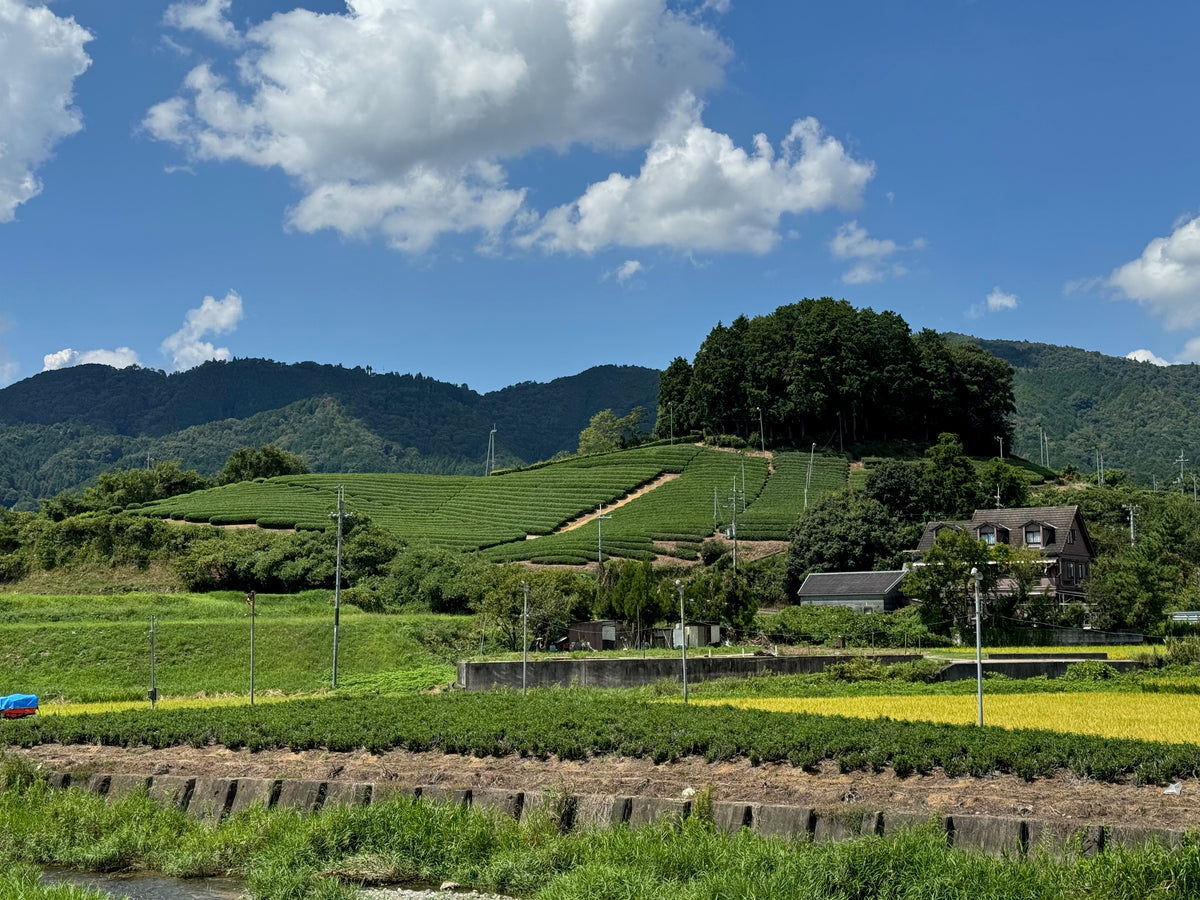
Wazuka lies in the south of Kyoto Prefecture, Japan. It is an important area for the production of Uji tea, whose origin extends beyond the city of Uji.

On its hills, cultivars, growing methods and leaf processing give rise to teas with varied characters. This is where ASADORI chose the teas for its first selection.

Récolte
Spring 2026